
Inventory and orders
Live stock levels, purchase orders and order tracking across channels.
Build · Custom ERP & CRM Development
When stock lives in one sheet, clients in another and invoices in a third, nobody sees the whole business. A custom ERP and CRM brings those pieces together around the way your team actually works.
Live stock levels, purchase orders and order tracking across channels.
Client history, communication tracking and follow-ups in one timeline.
Billing, invoices and financial reporting without re-entering data.
Role-based access so each person sees and changes only what they should.
The numbers owners and managers ask for, updated as work happens.
We learn what you are trying to achieve and how the work is done today.
You get a clear scope, timeline and cost before anything is built.
Design and development in steps you can review along the way.
Testing, handover, and ongoing improvement through a retainer or dedicated team.
ERP
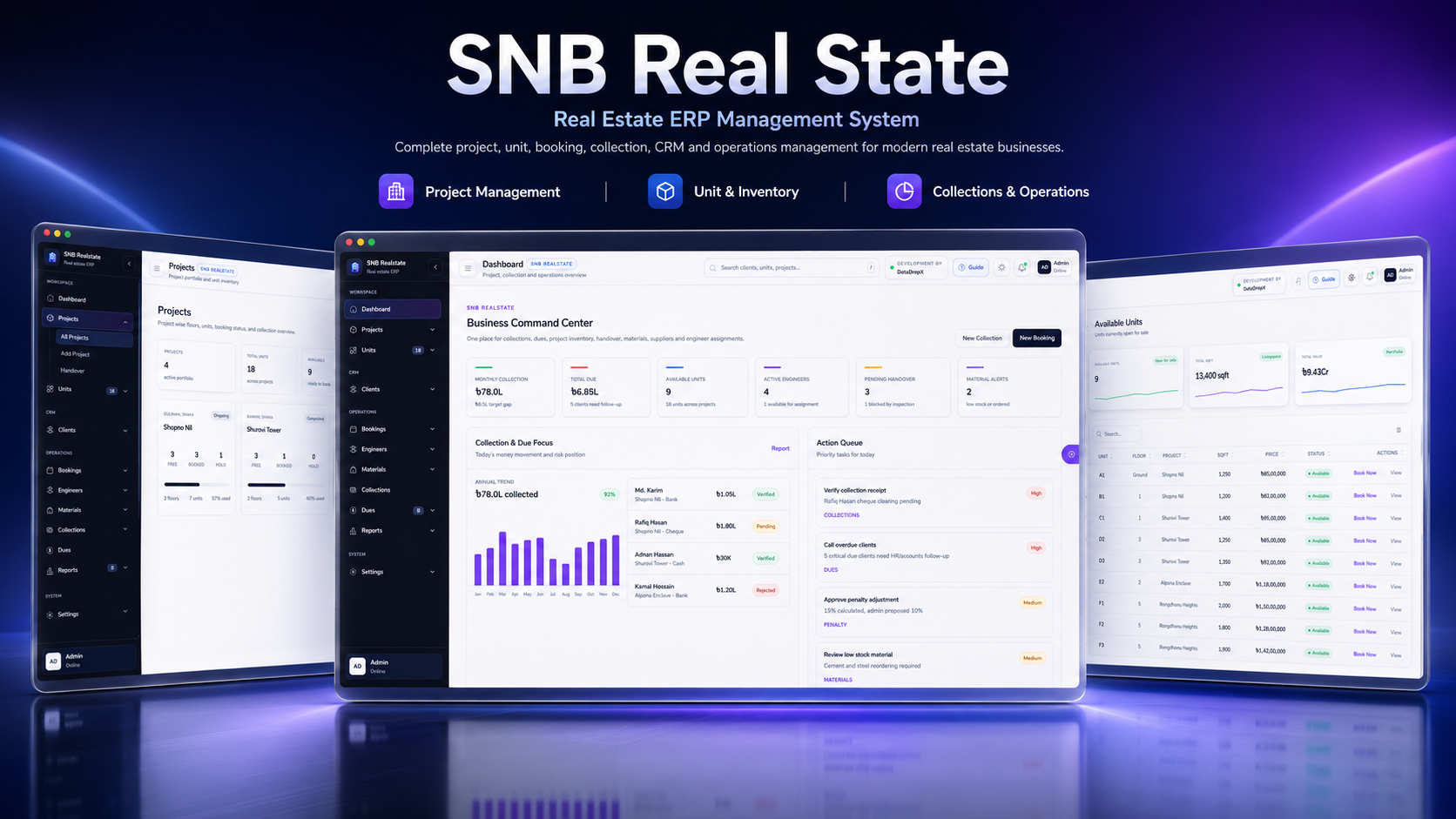
Manages 2,000+ properties and 500+ transactions from one system, replacing spreadsheets with a full real estate ERP covering inventory, CRM, and financial reporting.
Read the case study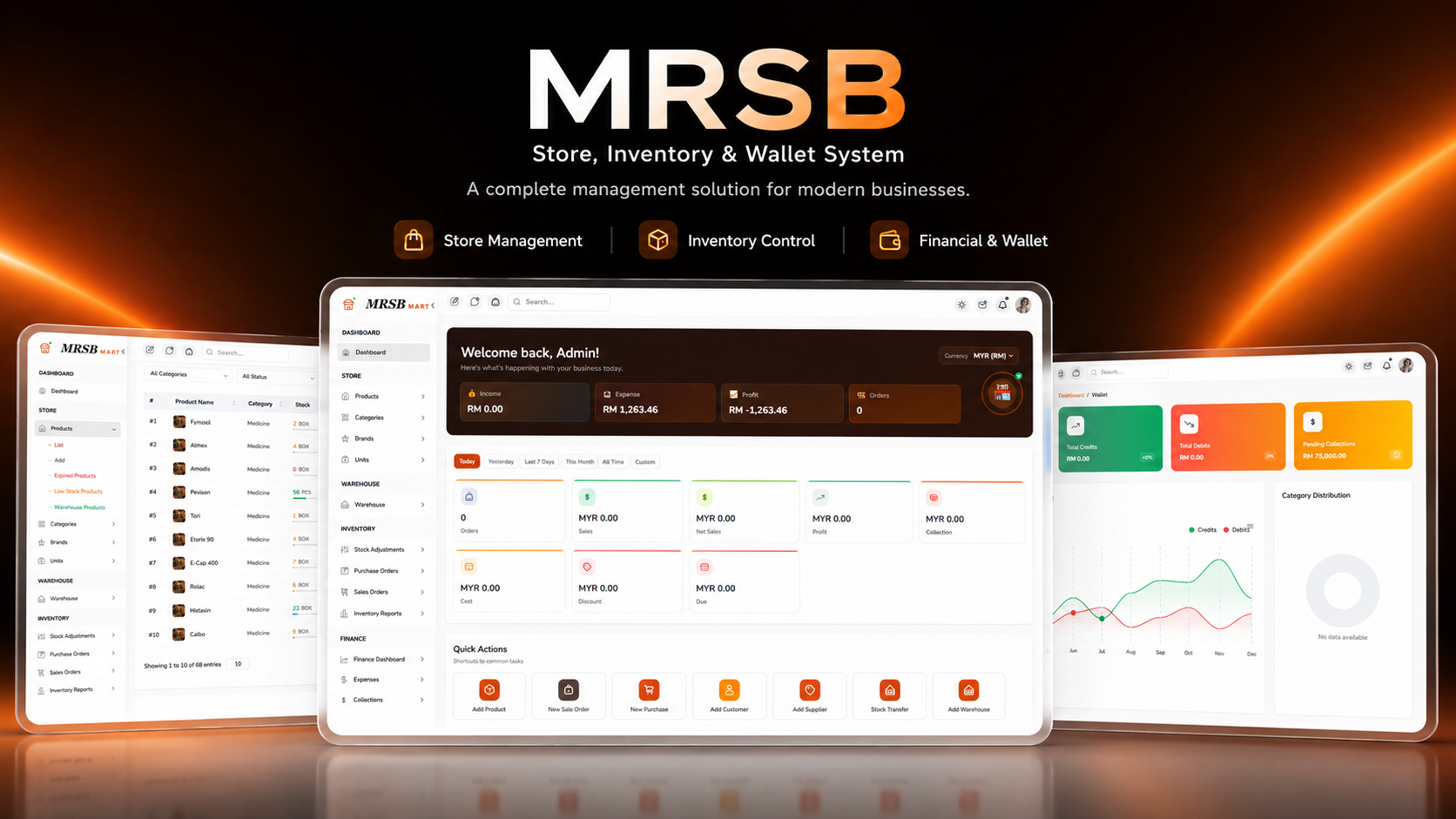
ERP
Powers $2M+ in revenue and 10,000+ active users on a single multi-vendor marketplace, with real-time inventory, integrated payments, and live order tracking.
Read the case studyOff-the-shelf ERP is quicker to start but asks you to fit its model. A custom ERP fits your exact workflow, though it takes longer to build. We help you weigh both before you commit.
Yes. We build integrations through APIs, so the ERP can exchange data with payment gateways, online stores and other systems you rely on.
Yes. Starting with the module that hurts most, often inventory or billing, keeps the first release small. Other modules can follow once the team is using it.
Custom software shaped around your workflow: business systems, dashboards, client portals and backend APIs, built and supported by DataDropX.
Set up reliable analytics and dashboards: event tracking, conversion measurement and clear reports so you can decide with real numbers.
Automate repetitive business processes: approvals, notifications, document handling and data sync between tools. Fewer manual steps and fewer mistakes.